
Something strange is happening to the Arboretum coneflowers…
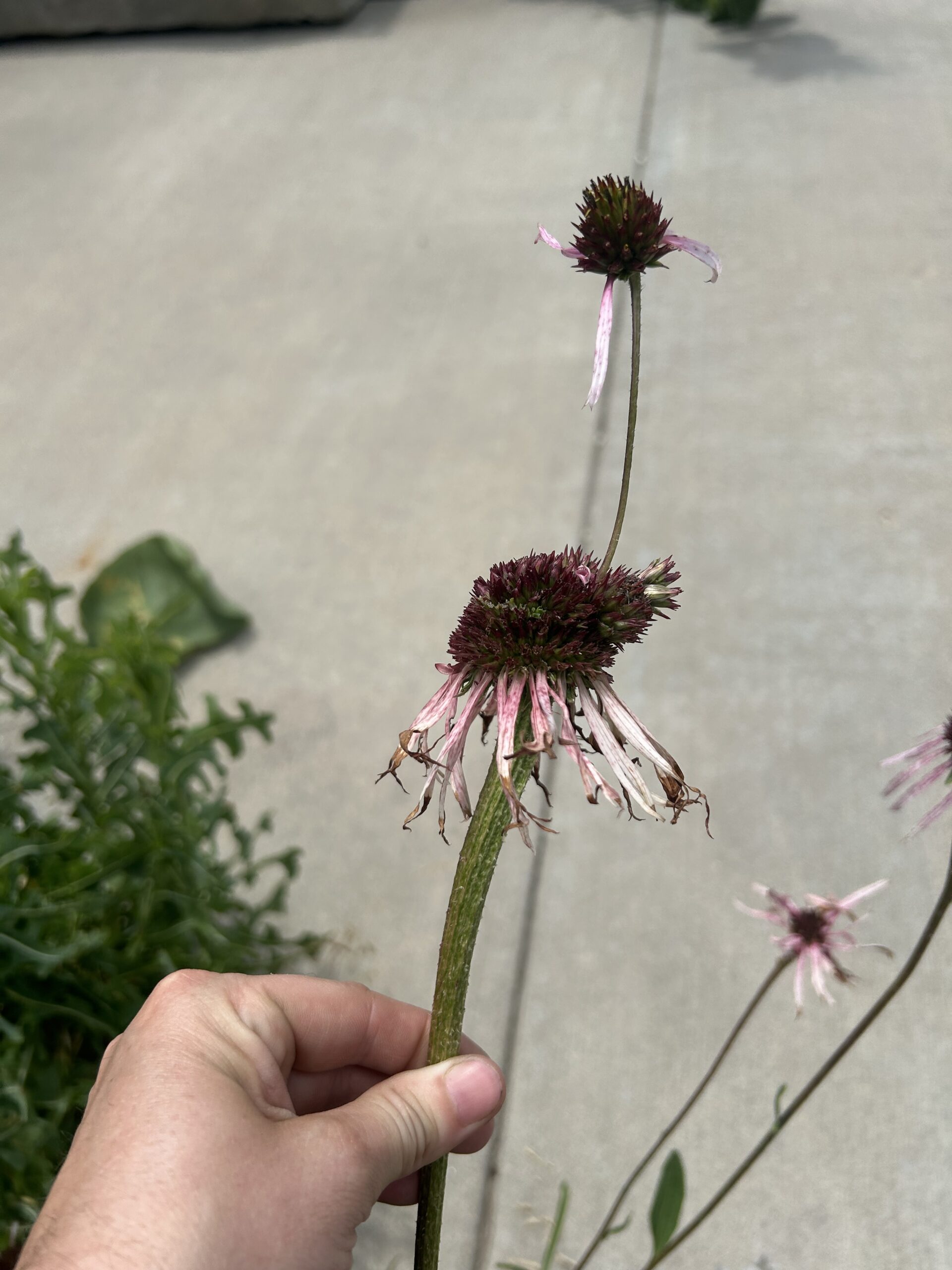
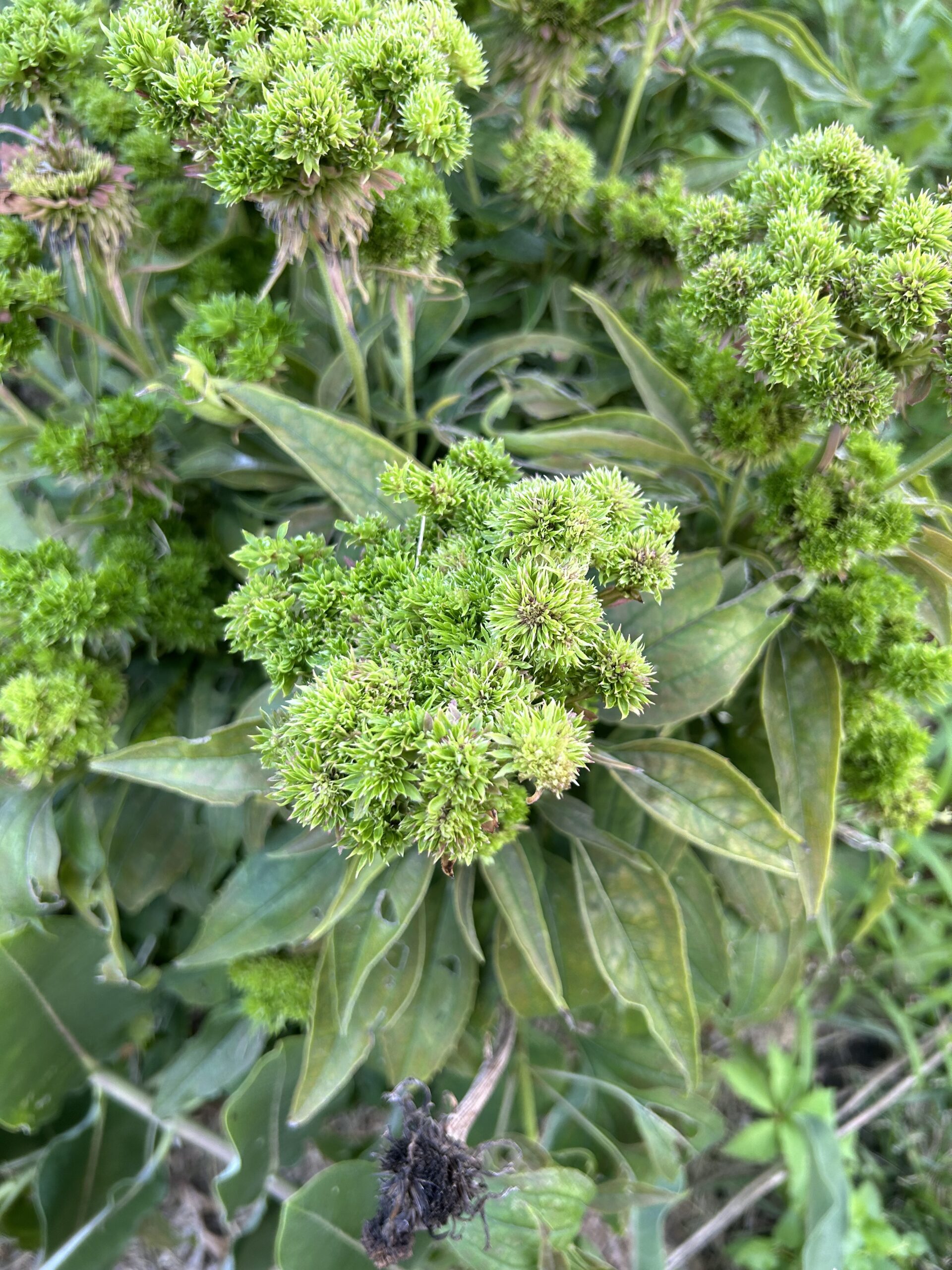
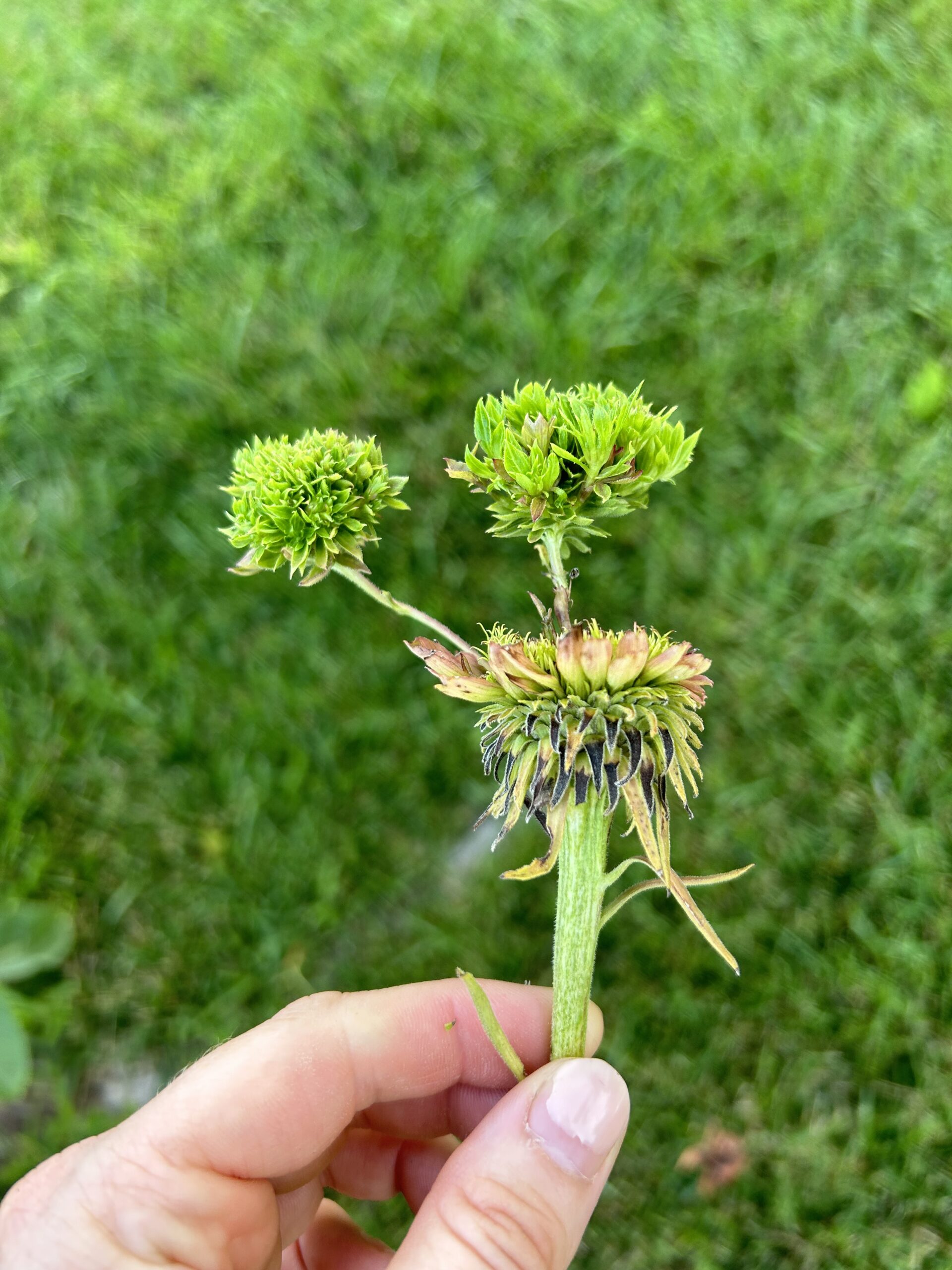
Several of the coneflower areas are showing odd protrusions, misshapen flower heads, stunted growth, and satellite flowers growing out of the disc. Unfortunately, these are all symptoms of a syndrome called Aster yellows.
A Terminal Plant Disease
Aster yellows is caused by a bacterium known as phytoplasma. Leafhoppers, tiny and ubiquitous insects that feed on plant juices, spread the bacterium to the plant. Leafhoppers feed on the plant and rarely cause serious damage, but they transmit the bacteria to the phloem, or the ‘bloodstream’ of the plant. For a human analogy, let’s consider how Lyme Disease is spread: a tick carrying the bacteria bites a human, the bacteria gets into our blood steam and makes us sick. Fortunately for us, antibiotics can help us get better. For plants infected with aster yellows, there is no cure.
What is at Risk?
As the name implies, plants in the Asteraceae family are at risk for this pathogen. This includes common garden favorites like Echinacea, Zinnia, marigolds, petunias and mums. But some vegetable crops can also suffer, like tomatoes, lettuce and celery. But before you condemn your whole garden to ruin, note that there are other pests can can cause similar symptoms. Eriophyid mites also cause deformed flower heads on Echinacea and some other species. Use this page to carefully compare symptoms and figure out which pest is affecting your plants.
Next Steps
If you suspect your plant has aster yellows, remove the plants promptly to stop the spread of the disease. While the disease doesn’t kill the plant, it will stay infected for its lifespan and never fully thrive. Aster yellows ceases to be contagious once the plant is dead, so feel free to bury it or compost. While you may be temped to use insecticides to control leaf hoppers in your landscape thinking this will solve your issue, it is not likely to help. They are so small, quick and numerous, pesticide application will probably do more harm to non-target insects than the leafhoppers.
Keep an eye out for symptoms of this disease, and contact your local extension agent for confirmation if you are unsure of what is ailing your plants.